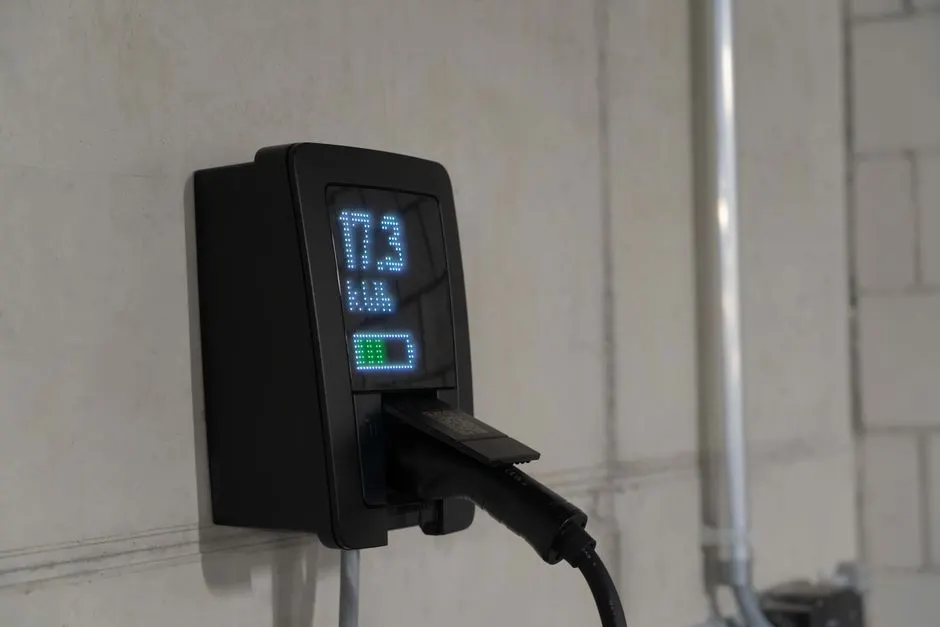
Preparing your Plant City home for an EV charger installation comes down to four things: confirming your electrical panel has enough capacity, choosing the right charger and mounting spot, pulling the proper permits, and planning a clean wiring route. Most homes need a 240-volt circuit, a dedicated breaker, and either a panel upgrade or a load management device. The whole process usually takes one to three weeks from first call to first charge.
This guide walks you through each step in order, with the numbers, costs, and local details that matter for Plant City homes in 2026.
What does preparing for an EV charger installation actually involve?
How to prepare your Plant City home for an EV charger installation is a sequence of electrical and logistical decisions that start well before a technician mounts anything on your wall. You need to know your panel's spare capacity, the distance from the panel to where you park, whether your utility and the city require permits, and what charger amperage your daily driving actually justifies.
Skip any of those and you risk a stalled install, a failed inspection, or a charger that trips the breaker every time your air conditioning kicks on. Plant City summers push HVAC systems hard, and a 48-amp charger running at the same time as a 4-ton AC unit is a real load calculation problem, not a hypothetical one.
Here is the short version of what preparation looks like:
- Read your electrical panel label and count open breaker slots.
- Decide between a hardwired Level 2 charger and a plug-in model.
- Pick a mounting location within reach of your parking spot.
- Confirm permit requirements with the City of Plant City.
- Get a load calculation done before you buy anything.
Each of those gets its own section below.
Step 1: Check your electrical panel capacity before anything else
Your electrical panel is the single biggest variable in whether your EV charger installation is a straightforward job or a multi-day project. Most Plant City homes built after 1990 have a 200-amp service, which comfortably supports a 40 to 48-amp Level 2 charger. Homes built in the 1950s through 1970s around the Historic Downtown district often have 100-amp panels, and those need either an upgrade or a load management solution.
Open your panel and look for the main breaker rating. It is usually a large double-pole breaker at the top labeled 100, 150, or 200. Then count the empty slots. A 240-volt EV circuit needs a double-pole breaker, which means two adjacent open slots.
If you have a 100-amp panel with no open slots, you have two realistic paths:
- Panel upgrade to 200 amps - typically $1,800 to $3,500 in this area, plus permit fees.
- Load management device - a smart splitter that pauses the charger when the house draws too much, usually $600 to $1,200 installed.
Load management is the smarter call for a lot of older Plant City homes because it avoids a full service upgrade and keeps the project under a week. We handle both routes, and you can see the full breakdown on our EV Charger Wiring and Electrical Panel Upgrades Plant City FL page.
One number worth knowing: a 48-amp charger draws 11.5 kW. A 40-amp charger draws 9.6 kW. That difference matters when your panel is already near its limit.
Step 2: Choose the right charger and mounting location
The charger you buy and where you mount it determine how much wire you need and how much the job costs. A Level 2 charger adds roughly 25 to 40 miles of range per hour, which covers overnight charging for nearly every commuter in Plant City. A standard 120-volt outlet adds 3 to 5 miles per hour and is not worth the install cost for most drivers.
Mounting location rules of thumb:
- Keep the charger within 25 feet of where you park. Cable lengths top out around 25 feet on most models.
- Mount at 48 inches above the floor for code compliance and comfortable reach.
- Avoid direct afternoon sun on the unit if you can. Florida heat shortens electronics life.
- If you park outside, choose a NEMA 4 or 4X rated enclosure.
Tesla owners have an extra consideration. The Tesla Wall Connector uses a proprietary connector, and while adapters exist, a native unit is cleaner. We install those regularly and cover the specifics on our Tesla Wall Connector Installation Plant City FL page.
For most single-family homes, a hardwired 48-amp unit on a 60-amp breaker is the sweet spot. It charges faster than a plug-in 40-amp model, avoids the cost of a NEMA 14-50 outlet, and eliminates a common failure point.
Step 3: Understand Plant City permits and inspections
Plant City requires an electrical permit for any new 240-volt EV charger circuit, and the work has to be inspected before the circuit is energized. This is not optional, and skipping it creates problems when you sell the house. Unpermitted electrical work shows up in title searches and can stall a closing.
The permit process itself is straightforward. You or your contractor submits an application to the City of Plant City Building Division, pays the fee, and schedules an inspection after the rough-in and again after final connection. Typical permit fees for a residential EV circuit run $75 to $200 depending on valuation.
Two things trip people up:
- Homeowner association approval. If you live in a deed-restricted community, check your HOA rules before you drill anything. Florida law limits how much an HOA can restrict EV charging, but you still need to follow the architectural review process.
- Utility coordination. If your project requires a service upgrade, your utility has to disconnect and reconnect power. That adds a scheduled outage day to the timeline.
We pull the permit, schedule the inspection, and meet the inspector on site. That whole workflow is covered on our EV Charger Permitting and Inspection Plant City FL page.
Step 4: Plan the wiring route and conduit
The wire run from your panel to the charger is where costs vary most. A short run through an unfinished garage might take 30 feet of 6-gauge copper. A run that crosses a finished living space, goes through an attic, and exits a brick wall can hit 100 feet and require conduit, fishing, and drywall repair.
Rough cost per foot for 6/3 copper wire and conduit installed runs $12 to $25 depending on access. That means a 30-foot run is a few hundred dollars and a 100-foot run with attic work can push past $2,000 just in labor and materials.
Things that make a run easier:
- An attached garage with the panel on a shared wall.
- An unfinished attic or crawlspace above the route.
- Existing conduit you can pull through.
Things that make it harder:
- Detached garages or carports. Those need a separate subpanel or a long exterior run.
- Block or brick exterior walls, common in older Plant City homes.
- Finished ceilings with no attic access.
If you are in a condo or apartment, the rules change entirely because you may not own the parking space or the electrical infrastructure. We handle those projects too, and the details are on our EV Charger Installation for Apartments and Condos Plant City FL page.
How much does it cost to prepare a Plant City home in 2026?
Typical 2026 pricing in the Plant City area for preparing and installing a home EV charger runs $1,200 to $3,500 for a standard install, and $3,500 to $6,500 if a panel upgrade is needed. The wide range comes down to three factors: panel capacity, wire run distance, and whether you need load management.
Here is a rough breakdown:
- Level 2 charger hardware: $400 to $800
- Labor and wiring (30-foot run): $700 to $1,400
- Permit and inspection: $75 to $200
- Panel upgrade (if needed): $1,800 to $3,500
- Load management device (if needed): $600 to $1,200
You can cut cost by mounting the charger close to the panel and choosing a hardwired 40-amp unit instead of a 48-amp model with a NEMA 14-50 outlet. You cannot cut cost by skipping the permit or undersizing the wire. Those shortcuts come back as failed inspections or melted insulation.
For a full picture of what a standard residential job looks like, see our Home EV Charger Installation Plant City FL page.
Common mistakes to watch out for
The most expensive mistake we see is buying a charger before anyone runs a load calculation. Homeowners order a 48-amp unit, then find out their 100-amp panel cannot support it without a $3,000 upgrade they did not budget for.
Other frequent problems:
- Using the wrong wire gauge. A 48-amp charger on a 60-amp breaker needs 6-gauge copper. Running 8-gauge because it is cheaper creates a fire risk.
- Skipping the GFCI requirement. The 2020 and 2023 NEC editions require GFCI protection for certain EV charging circuits. Your inspector will check.
- Mounting too far from the parking spot. A 25-foot cable does not reach if you mount on the wrong wall.
- Ignoring Florida heat. Chargers in direct sun in a Plant City July run hotter and fail sooner. Shade or a covered mount extends life.
- Not checking the HOA first. Getting approval after the fact is harder than getting it before.
Each of those is avoidable with a 20-minute site assessment before you spend a dollar on hardware.
When to call a professional
Call a licensed electrician when your panel is full, when you are not sure about your service amperage, or when the run crosses finished living space. Those three situations are where DIY attempts go wrong, and where the risk of an electrical fire or a failed inspection is real.
We handle the whole job at VoltFix Installation: load calculation, permit, wiring, mounting, inspection, and first charge test. You do not need to coordinate between an electrician, a permit office, and a hardware store. One call, one crew, one inspection.
If you already have a charger that is tripping breakers or charging slowly, that is a separate problem. Our EV Charger Repair Plant City FL team diagnoses those in a single visit.
Frequently Asked Questions
How do I prepare my home for an EV charger installation in Plant City FL?
Check your panel's main breaker rating and count open slots, choose a mounting location within 25 feet of your parking spot, and confirm permit requirements with the City of Plant City. Most homes need a 240-volt dedicated circuit on a 40 to 60-amp breaker. A load calculation before you buy hardware prevents expensive surprises.
What do I need before EV charger installation in Plant City?
You need a panel with spare capacity or a plan to add it, a permit from the City of Plant City, and a clear mounting location. If your panel is 100 amps or full, budget for either a 200-amp upgrade at $1,800 to $3,500 or a load management device at $600 to $1,200.
How long does it take to prepare for EV charger installation in Plant City Florida?
Most projects take one to three weeks from first call to first charge. The electrical work itself is usually a single day. Permit approval adds three to seven business days, and a panel upgrade can add another two to three days if utility coordination is required.
Who can help me prepare my home for an EV charger in Plant City?
A licensed electrical contractor handles the load calculation, permit, wiring, and inspection. VoltFix Installation does all of that in one visit, including the site assessment. You do not need to hire separate trades or manage the permit process yourself.
Do I need a 240-volt outlet or a hardwired charger?
Hardwired is better for most homes. It supports up to 48 amps, avoids the cost of a NEMA 14-50 outlet, and removes a common failure point. A 240-volt outlet makes sense if you plan to move the charger or want a portable setup.
Get help with EV Charger Installation in Plant City
If you want the whole job handled from load calculation to final inspection, we do that every week across Plant City and the surrounding area. One call gets you a site assessment and a fixed price.
Call VoltFix Installation at 1112222333 to schedule your EV charger installation.