Commercial EV Charger Installation in Plant City
Commercial EV Charger Installation in Plant City is what we do every week, from single Level 2 pedestals at a downtown storefront to multi-port DC fast charging for a fleet yard. We size the electrical service, pull the local electrical permit, run the conduit and wire, mount the units, and commission every charger before we hand you the keys. If you have been putting off business EV charging station installation in Plant City because the electrical work looked complicated, that part is ours to solve.
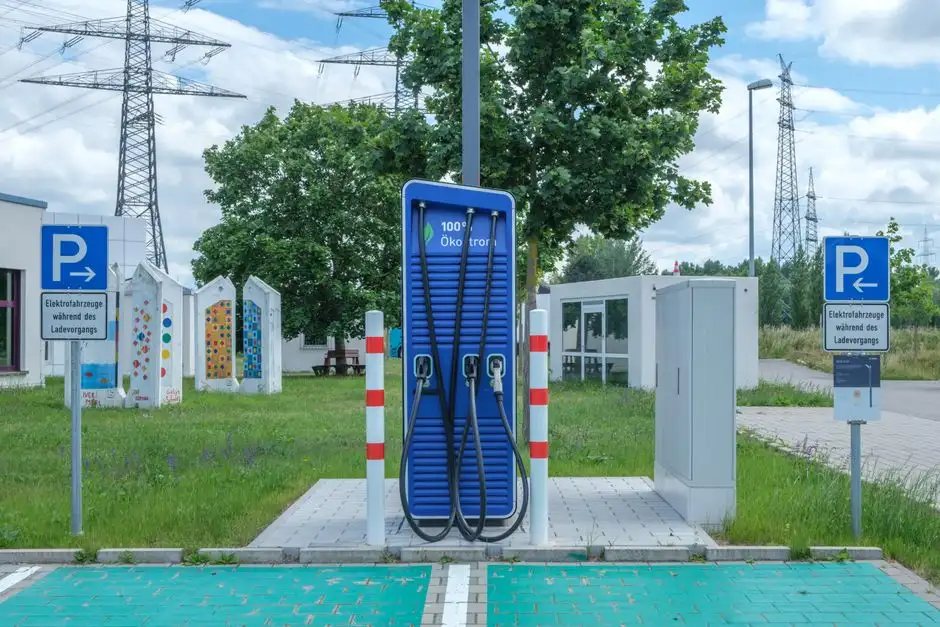
Service overview
What Commercial EV Charger Installation in Plant City covers
Commercial EV Charger Installation in Plant City is the licensed electrical work that puts charging equipment on your property and makes it safe to use: load calculations, a dedicated circuit or feeder, conduit and conductors, a mounting bracket or pedestal, the charger itself, and the permit and inspection that close the job. We install Level 2 chargers on 208/240-volt circuits and Level 3 DC fast chargers where the service can support them, using brands like ChargePoint, Siemens, ABB, Blink and Tesla. Every unit gets torqued terminations, a GFCI breaker where code requires it, and a full function test before we leave. Plant City businesses need this for a simple reason: customers and employees now arrive in electric vehicles and expect to leave with more range than they came with. A retail center on Alexander Street, a hotel off I-4, or a delivery depot near the Turkey Creek area all face the same math, and a properly sized commercial EV charging station installation Plant City FL keeps that math in your favor. We also handle the panel work, because a 1980s 200-amp service rarely has room for four chargers without an upgrade or a load management system.
! Problems we solve
Charger keeps tripping the breaker mid-session
Every trip is a customer standing at a dead unit, and repeated trips heat up terminations until something fails for good. It also points to a circuit that was never sized for continuous load.
GFCI fault or ground fault shuts the unit down
Ground faults are the most common commercial charger fault we see, and they stop charging entirely. Left alone, a real ground fault is a shock hazard, not just an inconvenience.
Electrical panel is already at capacity
You buy chargers, then find out the service cannot feed them. That stalls the project, and a full service upgrade can add weeks and thousands of dollars if it is not planned for.
Scope of work
What our Commercial EV Charger Installation includes
Every project we quote includes the electrical design, the permit, the installation labor, the commissioning and the inspection. Equipment is listed separately so you can see exactly what you are buying, and add-ons like panel upgrades or load management are priced as line items, not surprises.
-
01
Load calculation and design
We measure your service, review utility demand and calculate whether your panel can carry the chargers you want. You get a written design showing circuit sizes, conduit routes and charger locations before we touch a wall.
-
02
Permit and inspection
We pull the local electrical permit, schedule the inspection and meet the inspector on site. If anything gets flagged, we correct it and get it re-inspected. You end up with a signed inspection card for your records.
-
03
Conduit, wire and mounting
The install covers conduit bending and hanging, conductor pulling, junction boxes, the circuit breaker, mounting brackets or pedestals, and torqued terminations. We use UL listed materials and label every circuit at the panel.
-
04
Commissioning and handoff
We power each unit, verify voltage and ground with a multimeter, run a live charging session, and connect networked chargers to your account. Then we walk you through the app, the load settings and the warranty paperwork.
Why Plant City businesses add EV charging
Charging is no longer a perk for early adopters. It is a reason a customer picks your lot over the one two miles down the road, and a reason a driver stays parked for 40 minutes instead of 10.
Request a site walkTools and methods we use
Torque screwdriver and torque wrench
Terminations on breakers, lugs and charger terminals are torqued to the manufacturer's spec. Loose terminations are the number one cause of overheating chargers and nuisance breaker trips.
Clamp meter and multimeter
We measure actual load on the service before we design, and we verify voltage, ground and continuity at every charger before it goes live. It is how we catch a ground fault before the customer does.
Conduit bender and wire fish tape
Commercial runs go through walls, ceilings and across parking lots. We bend and hang conduit to code and fish conductors through finished spaces without tearing up your building.
ChargePoint and Tesla commissioning tools
Networked chargers need to be provisioned, assigned to your account and set to the right amperage. We commission them on site so the unit reports correctly from day one.
Local execution
Plant City sits in Hillsborough County with a climate that is hard on outdoor electrical equipment. Summer heat pushes charger electronics, and afternoon storms bring power surges that damage boards and connectors. We mount units with airflow in mind, seal conduit penetrations against rain, and install surge protection on commercial services where the site is exposed. Building stock matters too. Downtown Plant City and Historic Downtown Plant City have older commercial buildings with 100-amp and 200-amp services, so load management is often the difference between a $3,000 install and a $20,000 service upgrade. Newer corridors near Alexander Woods, Walden Lake and Varrea / Farm at Varrea usually have more capacity and simpler runs. If you need business EV charging station installation Plant City wide, we work around your operating hours, pull the City of Plant City electrical permit, and coordinate with Hillsborough County when a site plan changes. Our crews cover ZIP codes 33563, 33565 and 33566 regularly, and we know which inspectors want what before we schedule the visit.
How Commercial EV Charger Installation runs in Plant City
- • Downtown Plant City
- • Walden Lake
- • Turkey Creek
- • Alexander Woods
Recent work
Same-week service when your chargers go down
When a charger faults, we answer
A dead charger on a Friday afternoon is a weekend of lost customers, so we treat commercial charging calls as priority work. Our goal is to be on site within 24 to 48 hours for a faulted unit, and same-day when the site is in Plant City and the schedule allows. Our service trucks carry common breakers, GFCI devices, connectors, mounting hardware and network modules, so most repairs close in one visit. For larger properties with multiple ports, we can schedule a maintenance window that keeps half the stalls live while we work. If you are searching for business EV charger installation near me Plant City and you already have hardware that is failing, call us and describe the fault. Nine times out of ten we can tell you what it is before we arrive.
How our installation process works
Site walk and load check
We walk the property with you, photograph the electrical panel and meter, and read the service size. We check available capacity with a clamp meter and review your utility bills for peak demand. This visit usually takes 45 to 60 minutes and tells us whether you need a panel upgrade, a load management system, or neither.
Design and written quote
You get a plan showing charger locations, conduit routes, circuit sizes and the equipment we recommend. We price Level 2 and Level 3 options side by side so you can see the difference in cost and charging speed. The quote lists the permit fee, the equipment, the labor and the inspection, with nothing buried.
Permit and scheduling
We pull the local electrical permit with the City of Plant City and, where the work touches the site plan, coordinate with Hillsborough County review. Permits in this area typically clear in 5 to 10 business days. We schedule the install around your operating hours so your lot stays open.
What Commercial EV Charger Installation costs
Pricing depends on three things: the charger you choose, the condition of your electrical service, and how far the conduit has to run. A single Level 2 port on a service with spare capacity is a straightforward job. A DC fast charger with a new feeder and a panel upgrade is a project. We give you a written range after the site walk, and we list the permit fee, equipment and labor separately so you can see where the money goes. Typical 2026 pricing in the Plant City area is below.
Electrical service capacity
If your panel has spare capacity, the install is simple. If it does not, you are looking at a load management controller, a sub-panel or a full service upgrade, which is the single biggest swing in project cost.
Charger type and count
Level 2 units cost far less per port than Level 3 DC fast chargers, which need heavy feeders and often a service upgrade. Adding ports on the same feeder lowers the per-port cost compared to separate circuits.
Conduit run distance
The farther the charger sits from the panel, the more conduit, wire and labor the job takes. Parking lot runs and core drilling in garages add cost compared to a wall-mounted unit near the electrical room.
Frequently asked questions
How much does Commercial EV Charger Installation cost in Plant City FL?
Most single-port Level 2 commercial installs in Plant City run $1,800 to $4,500 in 2026, and dual-port or DC fast charger projects run $12,000 to $60,000 depending on the electrical service. The biggest cost driver is whether your panel has spare capacity. If it does not, a service upgrade or a load management system adds to the total. We give you a written range after the site walk.
What permits are required for commercial EV charger installation in Plant City Florida?
You need a local electrical permit from the City of Plant City, and the work has to pass inspection before the circuit is energized. If the project changes parking layout or adds a pedestal in a right-of-way, site plan review through Hillsborough County may also apply. We pull the electrical permit, schedule the inspection and meet the inspector on site so you are not chasing paperwork.
Who is the best commercial EV charger installer in Plant City FL?
The right installer is a licensed electrical contractor with EVITP-certified technicians, NEC code experience and a service arm for repairs after the warranty. Ask whether they pull the permit themselves, whether they do panel upgrades in-house, and how they handle a ground fault call in month eight. We answer yes to all three, and we will show you the load calculation before you sign.
How long does commercial EV charging station installation take in Plant City?
A two-port Level 2 install is usually one day on site, plus 5 to 10 business days for the permit. A DC fast charger with a new feeder and panel work runs two to four days on site. Fleet projects with six or more ports are staged over one to two weeks so part of the lot stays open. We give you a schedule with dates before we start.
Related services
Level 2 EV Charger Installation
Level 2 is the workhorse for Plant City businesses where cars sit for an hour or more. We install 208/240-volt units on dedicated circuits with the right breaker and conduit, sized to your actual panel capacity.
Level 3 DC Fast Charger Installation
DC fast charging delivers 50 kW and up, which means a heavy feeder and often a service upgrade. We design and install Level 3 for highway-adjacent lots, fleet yards and sites where a 30-minute stop is the whole visit.
Get your Commercial EV Charger Installation in Plant City scheduled
We walk the site, check your panel capacity and give you a written range before any work starts. Licensed electrical contractor, EVITP-certified technicians, permits and inspection handled. Call VoltFix Installation and let's get your lot charging.