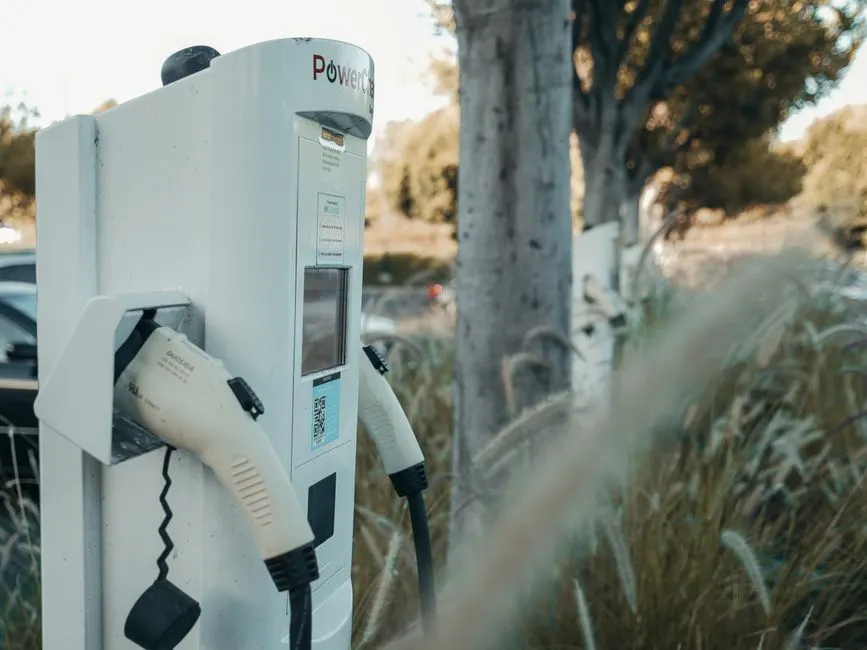
Your EV charger keeps tripping the breaker because the circuit is detecting a fault it is designed to catch: a ground fault in the charger or wiring, a breaker that is undersized or worn out, a loose lug connection heating up under load, or a shared circuit that cannot carry the charger plus everything else. In most Plant City homes we inspect, the culprit is one of those four - and it is almost always fixable without replacing the car or the charger.
Below we walk through each cause, the GFCI nuisance-trip problem that catches a lot of Tampa-area homeowners, what you can safely check yourself, and when it is time to bring in an electrician.
The short answer: what actually trips the breaker
An EV charger tripping the breaker is an electrical safety device doing its job - the breaker opens the circuit when it senses either too much current (overload) or current escaping where it should not (ground fault). A Level 2 charger pulls 32 to 48 amps continuously for hours, which is far harder on a circuit than a dryer or an oven. That sustained load exposes weak breakers, marginal wiring, and loose terminations that would never show up during a short appliance cycle.
So the question is not really "why is the breaker tripping" - it is "which of the two jobs is the breaker doing, and what is triggering it." That is the first thing we determine on a diagnostic visit.
Why does my EV charger keep tripping the breaker in Plant City FL?
In Plant City, the answer usually comes down to the age and condition of the home's electrical service combined with the heat. A large share of the housing stock around downtown, Walden Lake, and the older corridors off Alexander Street was wired for 100-amp or 150-amp service decades before anyone owned an EV. Adding a 40-amp continuous load to a panel that was already near capacity is a recipe for repeated trips.
Summer makes it worse. Attic temperatures in a Plant City July routinely push past 140°F, and a breaker that lives in a hot garage or an outside panel derates - meaning it trips at a lower current than its label suggests. We see more nuisance trips between June and September than the rest of the year combined.
If your charger was installed by a previous homeowner or a general handyman, the wiring method itself is worth a hard look. Proper Level 2 EV Charger Installation Plant City FL means a dedicated 240V circuit sized for continuous duty, with the correct breaker type and torque on every lug. Shortcuts there show up as trips within weeks.
The six causes we find most often
1. An undersized breaker or circuit
A 32-amp charger needs a 40-amp breaker; a 40-amp charger needs a 50-amp breaker; a 48-amp charger needs a 60-amp breaker. The breaker must be rated for 125% of the charger's continuous current. We regularly find a 40-amp charger on a 40-amp breaker - it will hold for a while, then trip once the garage warms up.
2. A worn or failing breaker
Breakers are mechanical. After years of carrying a heavy continuous load, the internal contacts pit and the thermal element drifts. A breaker that trips at 30 amps when it is labeled 40 is worn out, not protective. Replacement is inexpensive - usually $15 to $60 for the part in 2026 pricing.
3. Loose lugs and terminations
A loose connection creates resistance, resistance creates heat, and heat eventually trips the breaker or damages the wire. We torque every lug to the manufacturer's spec - typically 45 to 50 inch-pounds on a 50-amp breaker - and re-check the charger's terminal block. Aluminum wiring, common in some older Plant City homes, is especially prone to this.
4. A ground fault inside the charger or the wiring
Moisture in an outdoor-mounted unit, a nicked conductor in the conduit, or a failed internal component will trip a GFCI breaker instantly. This is the most common reason a charger trips the moment you plug in rather than after 20 minutes.
5. A shared circuit
If the charger shares a circuit with a garage freezer, a pool pump, or a workshop outlet, the combined load trips the breaker. An EV charger needs its own dedicated circuit - no exceptions.
6. The wrong breaker type for the job
Some chargers require a GFCI breaker; others have GFCI built in and will nuisance-trip when paired with a GFCI breaker. Matching the breaker to the charger's own protection is a detail that gets missed constantly.
EV charger tripping GFCI in Plant City: the nuisance-trip problem
EV charger tripping GFCI in Plant City is the single most common call we get, and it is usually not a real fault. The 2020 and 2023 National Electrical Code editions require GFCI protection for EV charging outlets, and a hardwired Level 2 charger with its own internal GFCI can fight a GFCI breaker - each one senses the other's leakage current and one of them trips.
There is a fix, and it does not involve disabling safety equipment. We either hardwire the unit to avoid the outlet GFCI requirement, or we match the breaker type to the charger's listed instructions. The label on the charger tells you what it wants; we follow it.
If your charger is outdoors or in a humid garage, moisture ingress is the other GFCI trigger. A unit mounted where irrigation spray or driving rain hits it will trip repeatedly until the enclosure is resealed or the unit is relocated. We handle EV Charger Relocation Plant City FL regularly for exactly this reason.
What causes an EV charger to trip the breaker in Plant City Florida?
Beyond the six causes above, the Plant City climate and housing stock add a few local wrinkles. Lightning season from June through September sends surges through the grid, and a charger on a circuit without proper surge protection can take a hit that damages its internal board - after which it trips every time.
Older homes with Federal Pacific or Zinsco panels are another local issue. Those panels are known to have breakers that fail to trip when they should, or trip when they shouldn't. If your charger is on one of those panels, the right move is a panel evaluation before you spend money chasing the charger.
Finally, voltage drop matters. A charger on a long run - say a detached garage 120 feet from the main panel - needs larger conductors to keep voltage drop under 3%. Undersized wire on a long run causes the charger to draw more current, and the breaker trips. Proper EV Charger Wiring and Electrical Panel Upgrades Plant City FL solves this permanently.
EV charger tripping breaker troubleshooting Plant City: what you can check safely
You can safely check a few things before calling us, and doing so will speed up the diagnosis.
- Note when it trips. Immediately on plug-in points to a ground fault. After 20 to 60 minutes points to overload or heat. Randomly points to a loose connection or a shared load.
- Check the charger's fault light. Most units blink a code. Look it up in the manual - it tells you whether the charger sees a ground fault, an over-temperature, or a supply problem.
- Look at the breaker label. Confirm the amperage and whether it is GFCI. Compare it to the charger's rated input current.
- Feel the breaker (carefully). A breaker that is warm to the touch under load is normal; one that is hot enough to be uncomfortable is not.
- Try a lower charge rate. If your charger or app lets you dial back to 24 or 32 amps and the trips stop, you have confirmed an overload or heat issue.
Do not open the panel, do not re-terminate wires, and do not replace a breaker to "see if that fixes it." Those are the three things that turn a $150 diagnostic into a $1,500 repair.
Common mistakes we see homeowners make
The most expensive mistake is upsizing the breaker without upsizing the wire. Putting a 60-amp breaker on 8-gauge wire does not give you more charging power - it gives you a fire risk, because the wire now carries more current than it is rated for.
The second is disabling the GFCI. We have seen breakers swapped for non-GFCI units and GFCI receptacles bypassed to stop nuisance trips. That removes the protection that keeps you from being electrocuted in a wet garage.
The third is ignoring the panel. A charger that trips repeatedly on a panel that is already full is telling you the service is at its limit. The right answer is a load calculation and, often, a panel upgrade - not a bigger breaker.
The fourth is buying a new charger before diagnosing the circuit. Nine times out of ten the charger is fine and the problem is in the wiring or the breaker. Our EV Charger Repair Plant City FL service starts with the circuit, not the box on the wall.
When to call a professional
Call us when the breaker trips more than once a week, when you smell burning or see scorch marks at the panel, when the charger trips immediately on plug-in, or when your panel is a Federal Pacific, Zinsco, or a 100-amp service feeding a 40-amp charger. Those are not DIY situations.
VoltFix Installation handles the full diagnosis: we check the breaker, torque every termination, run a load calculation on your panel, verify voltage drop, and confirm the charger's firmware and fault codes. We tell you what is wrong before we touch anything, and we quote the fix upfront.
If your charger has been tripping for months, the repeated heat cycles have likely already damaged the breaker and the wire terminations. A proper EV Charger Maintenance Plant City FL visit now is cheaper than a panel rebuild later.
Frequently Asked Questions
Why does my EV charger keep tripping the breaker in Plant City FL?
The most common causes are an undersized breaker, a worn breaker, a loose lug connection, a ground fault in the charger or wiring, or a shared circuit. In Plant City, summer heat in garages and older 100-amp panels make all five more likely. A diagnostic visit pinpoints which one within an hour.
How do I stop my EV charger from tripping the breaker in Plant City?
Start by noting when it trips and checking the charger's fault code. If it trips immediately, it is a ground fault; if after 20 to 60 minutes, it is overload or heat. The permanent fix is matching the breaker to the charger's rating, torquing all terminations, and confirming the circuit is dedicated - usually a one-visit repair.
What causes an EV charger to trip the breaker in Plant City Florida?
Heat, worn breakers, loose connections, GFCI mismatch, and shared circuits cause most trips here. Lightning-season surges from June through September also damage charger boards. Homes with Federal Pacific or Zinsco panels need a panel evaluation before anything else.
Who repairs EV chargers tripping breakers in Plant City FL?
VoltFix Installation repairs EV chargers tripping breakers across Plant City, from Walden Lake to downtown. We diagnose the circuit, not just the charger, and we handle breaker replacement, panel upgrades, and rewiring in one visit. Call 1112222333 to schedule.
Is it safe to keep resetting the breaker?
Resetting it once or twice to gather information is fine. Resetting it repeatedly is not - every trip means heat and stress on the breaker and wiring. If it trips three times in a week, stop resetting it and get it diagnosed.
Get help with EV Charger Installation in Plant City
If your charger keeps tripping, we can diagnose the circuit and fix it - usually in a single visit. Call VoltFix Installation at 1112222333 and we will get your car charging reliably again.