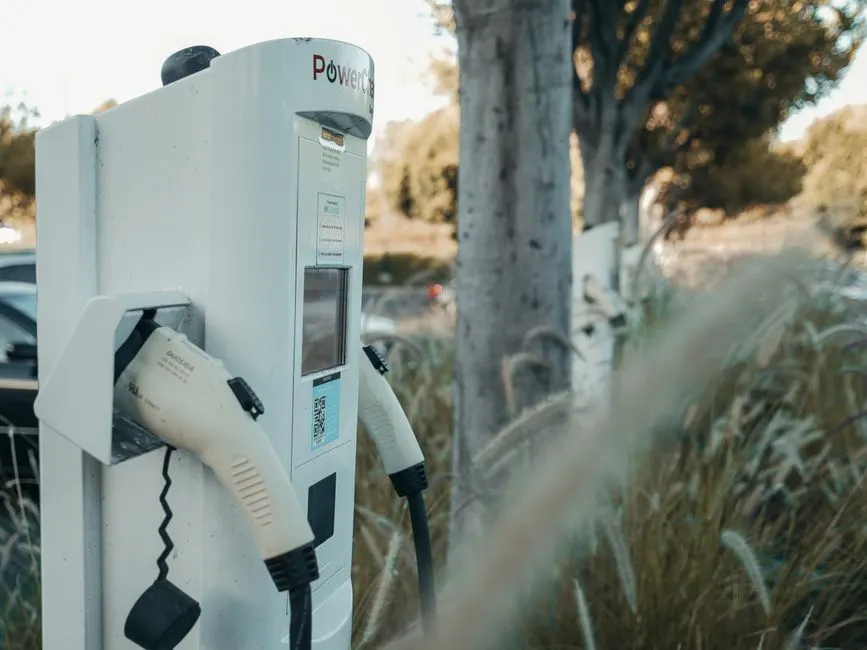
If your EV charger is not charging your car, the cause is almost always one of eight things: a tripped breaker, a loose plug or handle, a ground-fault trip inside the unit, a schedule or amperage setting in the car, a failed onboard charger, a bad pilot signal on the charging cable, a heat-related derate, or a wiring or panel problem that only shows up under load. In Plant City, the two we see most on service calls are heat derates in July and August and 240V circuits that were never sized for a continuous 40-amp draw. The rest of this post walks through what you can safely check yourself, what the fault codes actually mean, and the point where you should stop poking at it and call us.
The short answer: why your EV charger stopped charging
An EV charger not charging car situation in Plant City is a handshake problem. The charger and the vehicle have to agree on voltage, available current, and a ground reference before a single electron moves. If any one of those three is off, the session never starts, or it starts and dies 30 seconds in.
That handshake runs on a low-voltage pilot signal through the J1772 or NACS connector. The charger tells the car "I can give you 40 amps." The car answers "I'll take 32." If the car does not hear that signal, it sits there doing nothing and the charger light stays green or blue. If the charger senses a ground fault, it kills the session instantly and throws a red or amber light.
For context: why is my EV charger not charging my car Plant City FL is a question about a specific piece of equipment on a specific circuit, not a general EV problem. A Level 2 charger running on a 50-amp breaker pulls 40 amps continuously for hours. That is a heavy, constant load, and it exposes every weak connection in the run from your panel to your garage.
If you are still deciding what equipment belongs on your wall in the first place, our team handles EV Charger Installation Plant City FL for homes, shops, and commercial lots across the area, and we size the circuit to the car, not to a generic spec sheet.
Start with the five-minute checks before you call anyone
Roughly one in four calls we run ends with the customer realizing the problem was on their end, not the charger's. Work through these in order before you assume the unit is dead.
- Check the breaker. A 40-amp continuous load will trip a tired 50-amp breaker on a hot afternoon. Reset it once. If it trips again within a minute of plugging in, stop and call us.
- Reseat the handle. Push the connector in until you hear the latch click. A half-seated handle on a NACS or J1772 port is the single most common "dead charger" we find.
- Look at the car, not the charger. Open the charging screen in the vehicle. If it says "charging scheduled" or "waiting for off-peak," the charger is fine and your car is waiting for 11 PM.
- Check the amperage setting. Many cars let you dial the AC charge rate down. If someone set it to 6 amps, you will get 2 miles of range an hour and assume the charger failed.
- Try a different vehicle or a public station. If your car charges fine at a public station in Plant City, the problem is your home unit. If it fails everywhere, the onboard charger is the suspect.
If all five come back clean and the car still will not take a charge, you are past the DIY stage. That is when a proper diagnostic on the circuit and the unit pays for itself.
What causes an EV charger to stop charging in Plant City Florida
Common reasons an EV charger stops charging in Plant City Florida come down to heat, wiring, and grounding. Our summers run 95°F with 80% humidity for weeks, and garages here regularly hit 110°F inside. That matters because most residential chargers derate themselves above 122°F internal temperature and shut down entirely around 140°F.
Here is what we actually find on calls, ranked by frequency:
- Heat derate or thermal shutdown. The unit charges for 20 minutes, then stops, then restarts. That cycle is the charger protecting itself, not a failure.
- Loose terminations at the breaker or the charger. A connection that was torqued to spec at install can loosen after two summers of thermal cycling. Loose lugs mean voltage drop, and voltage drop means the charger faults out.
- Ground-fault trips. Florida's humidity plus a garage floor that stays damp in the rainy season is a recipe for nuisance GFCI trips inside the unit.
- Undersized circuit. A charger set for 40 amps on a 40-amp breaker will nuisance-trip. It needs a 50-amp breaker and 6-gauge copper.
- Failed onboard charger in the vehicle. This is a car repair, not a charger repair, and it is more common than people expect on 2018-2021 models.
- Software or firmware mismatch. A charger that has not been updated in two years can refuse to handshake with a newer car.
If your unit is more than eight years old and has already been repaired once, replacement usually beats another repair. We handle EV Charger Replacement Plant City FL with same-week scheduling, and we haul the old unit away.
EV charger fault codes Plant City: what the blinking lights mean
EV charger fault codes Plant City homeowners ask about most are the ones on the front of the unit, and they are more useful than people think. Every major brand uses a light pattern to tell you which of four things went wrong: power, ground, communication, or internal fault.
The patterns are roughly consistent across brands:
- Solid green or blue: ready to charge, no car connected. Normal.
- Blinking green: charging in progress. Normal.
- Solid red: internal fault. The unit has locked itself out and needs a power cycle at the breaker.
- Blinking red, one to six pulses: the pulse count is the code. One pulse is usually ground fault. Three is often over-temperature. Six is frequently a communication or pilot error.
- Amber or yellow: the unit is derated or waiting on a schedule or load-management signal.
Write down the pulse count before you reset anything. That number tells us in ten seconds what would otherwise take a 45-minute diagnostic. If the light is solid red and a breaker reset does not clear it, the fault is inside the unit or the wiring feeding it.
One more thing worth knowing: if your charger shares a circuit with a load-management device, an amber light may just mean the system is holding the charger back because your AC or dryer is running. That is the system working correctly.
EV charger not working after a power outage in Plant City FL
An EV charger not working after a power outage in Plant City FL is usually a ground-fault lockout, not a dead unit. When the grid drops and comes back, the surge can trip the charger's internal GFCI and it will not reset itself until you cut power at the breaker for a full 60 seconds.
Here is the sequence that clears about 80% of post-outage lockouts:
- Turn the charger's breaker off at the panel.
- Unplug the vehicle and leave the handle on the holster.
- Wait a full 60 seconds. Not 10. The capacitors need to drain.
- Turn the breaker back on and wait for the unit to run its self-test, usually 10-20 seconds.
- Plug in and watch the light for 30 seconds.
If it faults again on the first plug-in, the surge damaged something. That is a repair, not a reset. Our team runs EV Charger Repair Plant City FL calls for exactly this, and we carry the common GFCI and control boards on the truck.
If your neighborhood sees repeated outages, a whole-home surge protector at the panel is a $300-$600 add that protects the charger, the AC, and everything else on the service.
Common mistakes we see on Plant City charger calls
The mistakes that turn a 20-minute fix into a $900 repair are almost always the same ones. We see them on nearly every call where a homeowner tried to troubleshoot first.
- Resetting the breaker over and over. If a 50-amp breaker trips three times in an hour, it is telling you something is wrong. Repeated resets on a faulted circuit can weld contacts and start a fire.
- Using an extension cord. A 12-gauge extension cord on a 40-amp charger will melt. There is no safe extension cord for Level 2 charging.
- Ignoring the derate. A charger that runs at half speed for a month is telling you the circuit is undersized or the terminations are loose. Both get worse.
- Replacing the charger when the panel is the problem. We have pulled three-month-old units off walls where the real fault was a 100-amp service that could not carry the load.
- DIY installs on a 14-50 outlet. A dryer outlet is not a charger circuit. It is a 30-amp circuit at best, and it will not carry a 40-amp continuous load.
If your panel is the bottleneck, the fix is not a new charger. It is a service upgrade, and we do those as part of EV Charger Wiring and Electrical Panel Upgrades Plant City FL so the charger, the AC, and the range can all run at once.
When to call a professional
Call us the moment the breaker trips twice, the unit shows a solid red light after a reset, or you smell anything hot near the panel. Those three are not DIY problems, and none of them get better on their own.
VoltFix Installation is a licensed electrical contractor working across Plant City and eastern Hillsborough County. We diagnose the circuit and the unit together, because half the calls we run turn out to be a wiring problem the homeowner blamed on the charger. You get a straight answer on whether you need a repair, a replacement, or a panel upgrade, and you get it in one visit.
If you are in a rental, an apartment, or a condo and the shared charging equipment is the problem, we also handle EV Charger Installation for Apartments and Condos Plant City FL and can work directly with your property manager.
Frequently Asked Questions
Why is my EV charger not charging my car in Plant City FL?
The most common causes are a tripped breaker, a half-seated charging handle, a schedule set in the car, or a heat derate during summer. In Plant City, garage temperatures above 110°F cause chargers to pause and restart, which looks like a failure but is the unit protecting itself.
How do I troubleshoot my EV charger not charging in Plant City?
Reset the breaker once, reseat the handle until it clicks, check the car's charging schedule and amperage setting, then try a public station. If the car charges elsewhere, the problem is your home unit or its circuit. Stop after one breaker reset if it trips again.
What causes an EV charger to stop charging in Plant City Florida?
Heat derates above 110°F, loose terminations at the breaker or charger, ground-fault trips from humidity, an undersized circuit, a failed onboard charger in the vehicle, and stale firmware cover about 95% of the cases we see. Most show up as a mid-session stop rather than a total failure.
Who repairs EV chargers not charging in Plant City FL?
A licensed electrical contractor, not a general handyman. The fault is often in the circuit, the breaker, or the terminations rather than the charger itself. VoltFix Installation repairs and replaces chargers across Plant City, usually within 24 to 48 hours of your call.
How much does an EV charger repair cost in Plant City in 2026?
Typical 2026 pricing runs $150-$350 for a diagnostic and simple repair, and $400-$900 if a control board, GFCI module, or breaker needs replacing. A full replacement with a new Level 2 unit installed runs $1,200-$2,400 depending on circuit length and panel condition.
Get help with EV Charger Installation in Plant City
If your charger is dead, derating, or throwing a fault code you cannot clear, we will find the cause and fix it. Call VoltFix Installation at 1112222333 and we will get your car charging again.